
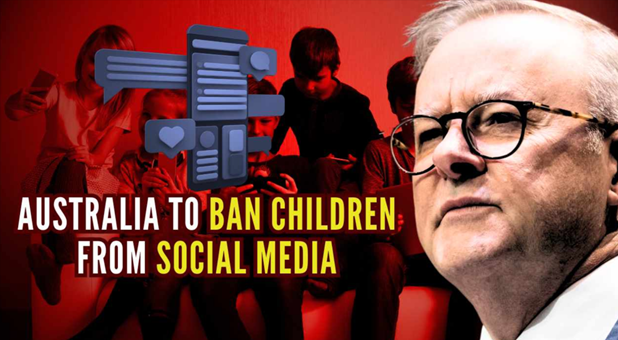
Australia’s Social Media Ban for Kids In a decisive move that has drawn attention worldwide, Australia has become the first country to legislate a sweeping ban on under-16s having accounts on major social media platforms. This landmark policy — embedded in the Online Safety Amendment (Social Media Minimum Age) Act 2024 — aims to reshape how young Australians engage with digital space, placing the responsibility for protection squarely on tech companies rather than parents or children alone. ABC+3www.ndtv.com+3Wikipedia+3
1. What the law says
The core provisions of the legislation include:
-
Children under the age of 16 are no longer permitted to hold accounts on designated social media services. www.ndtv.com+2Business Standard+2
-
Major platforms such as Instagram, TikTok, Snapchat, Facebook, X (formerly Twitter) and YouTube are expected to take the required “reasonable steps” to verify ages or otherwise prevent under-16s from signing up or maintaining accounts. www.ndtv.com+2ABC+2
-
Platforms that fail to comply face fines up to AUD 50 million (approx. USD 33 million) for systemic breaches. NPR+1
-
The law does not penalise children or their parents for misuse; rather, the burden is on the platforms. CNBC+1
-
The implementation date is set for December 10, 2025 — giving a transition period. Courier Mail+1
This is widely regarded as a world-first in its ambition and scope. Business Standard+1
2. Why Australia moved ahead
The rationale behind the ban is multi-faceted:
-
Mental health & development concerns: The government and regulators cite evidence that heavy social media use in early adolescence is linked to difficulties in sleep, concentration, body-image anxiety, bullying, and self-harm. Human Rights Commission+1
-
Protecting children from harm: Risks such as cyberbullying, grooming, exposure to violent or sexual content, and algorithmic pressures on young minds were flagged as key drivers. www.ndtv.com+1
-
Data & privacy risks: The report from the Australian Human Rights Commission (AHRC) noted that children often do not understand how their data is collected and used. The ban is seen as a way to mitigate those risks. Human Rights Commission
-
Changing norms: The government considered that social media access doesn’t have to be a “defining feature” of growing up in Australia and that delaying access could allow more time for children to develop offline social skills. Business Standard
The policy has been supported by many parents: as one Australian parent told the ABC, the law gives a “black-and-white” rule which makes it easier to say no when younger children ask to join social media. ABC
3. The arguments for & against
✅ Supporters say:
-
It gives children a few more years of childhood without the pressures of online popularity, peer comparisons, algorithmic feeds and identity crises.
-
It shifts the burden of enforcement from families (who often struggle) onto big tech companies that profit from kids’ time and data.
-
It is a bold step that could serve as a model for other countries. CNBC+1
❌ Critics warn:
-
Enforcement challenges: Tech companies say that verifying age is extremely difficult without jeopardising privacy or forcing burdensome ID checks. India Today+1
-
Potential for unintended consequences: There’s concern that kids will simply use VPNs, false ages or unregulated platforms — pushing them into less safe digital corners. India Today
-
Rights & access concerns: Some argue the ban may limit young people’s freedom of expression or exclude them from beneficial online communities, educational content, social connection. Human Rights Commission
-
One‐size‐fits‐all risk: A blanket ban doesn’t distinguish between high-risk and low-risk use, supervised vs unsupervised, nor between platforms with varying harm profiles.
4. What this means for kids, parents and platforms
For children:
Younger teens (13-15) will no longer be able to create or maintain accounts on major platforms. They may still view content on some platforms (depending on features) but will not be able to post, comment or message. www.ndtv.com
This may mean a shift in how they socialise — more offline interaction, more supervised online activity, or migration to platforms not covered by the law.
For parents and families:
This law provides a national guardrail. Parents will still play a key role, but the legislative rule removes debates over “when is it okay” and the burden of policing age. Some parents welcomed this. ABC
However, parents may still need to guide safe online habits, model healthy digital behaviour, and monitor younger children’s screen time and content consumption.
For platforms and tech companies:
They bear the responsibility. Platforms must implement age-verification or age-assurance mechanisms, detect and remove existing under-16 accounts (in Australia), and take “reasonable steps” to prevent their creation. Failure risks substantial fines. India Today+1
They also face pressure to adapt interfaces, create more protected modes for teens, and ensure compliance globally. Some platforms — like YouTube — raised concerns about the categorisation of their service and the practicality of the rule. The Times of India+1
5. Key practical issues & what to watch
-
Age verification methods: The law doesn’t mandate a single method (such as government ID), but expects platforms to take “reasonable steps”. Over-broad verification (requiring IDs) was warned against by the regulator. AP News+1
-
Transition period: The law gives platforms time to comply (approx. 12 months from passing) before full enforcement begins. Sky News+1
-
Scope and placement: Not all online services are covered — for example, messaging services, educational or health services may be exempt. www.ndtv.com
-
Monitoring and enforcement: Platforms’ internal monitoring of age and behaviour — and possibly cooperation with regulators — will be central to real-world impact.
-
Global watch-point: Many other countries are watching Australia’s rollout as a potential model or cautionary tale. ABC
6. Potential outcomes and implications
-
Positive scenario: Younger teens spend more time offline, develop interpersonal and emotional skills without the constant push of curated feeds and algorithmic feedback. Parents feel some relief. Platforms shift to more age-appropriate practices and content moderation improves.
-
Less positive scenario: Kids migrate to lesser regulated platforms, or simply bypass age checks. Platforms struggle with verification and compliance, fines accrue but enforcement remains patchy. Some teens feel excluded from social spaces, or use parental/older accounts instead.
-
Broader effect: If successful, this law could influence other jurisdictions to adopt similar age-restrictions or force tech companies to differentiate product offerings by user age more explicitly.
7. Why it matters beyond Australia
The Australian model signals a shift: governments are willing to legislate not just content moderation but user access limits based on age. It raises fundamental questions:
-
How early is “too early” to have an unregulated social media account?
-
Who has responsibility for digital childhood — families, schools, tech companies or governments?
-
How do we balance protection with children’s rights to expression, connection and learning?
-
If platforms are legally responsible for age and access, could this lead to major changes in how social networks design products (less addictive feeds, fewer data-harvesting features, more age-segmented versions)?
8. Final thoughts
Australia’s decision to ban under-16s from major social media accounts is bold and blunt. It recognises that the architecture and business model of social media (engagement-driven algorithms, peer pressure, data monetisation) can pose risks to young people. It chooses a structural intervention over purely educational or parental-control approaches.
What remains to be seen is how this policy plays out in practice: whether it genuinely reduces harm for children, or pushes the problem into other spaces. For parents, educators and tech designers, it’s a prompt to re-think not just how children use social media, but when and why they access it.
If you like, I can pull together key questions for parents and a checklist for families in light of this law, or we can compare how other countries are responding similarly. Would you like that?